
View
Multi-Asset


Capital is at risk. The value and income from investments can go down as well as up and are not guaranteed. An investor may get back significantly less than they invest. Past performance is not a reliable indicator of current or future performance and should not be the sole factor considered when selecting funds.
By selecting intermediary or institutional investor I confirm that I am a financial professional and understand that the information should not be distributed to or relied upon by any other persons. It’s provided for general information purposes only and is not personal advice to anyone to invest in any fund or product. Information taken from trade and other sources is believed to be reliable, although we don’t represent this as accurate or complete and it shouldn’t be relied upon as such.


Anyone in the UK will tell you that this year’s most persistent talking point hasn’t been artificial intelligence valuations, unpredictable US government policy or even the direction of the dollar. It’s been the weather.
In the Cornish village of Cardinham, it rained for 50 consecutive days. Elsewhere in the south west of England, many areas saw more than a month of continuous rain. Anyone in the UK trying to walk the dog, dry coats for the school run or navigate flooded roads will be familiar with the challenges this brings.
It’s not the intensity. It’s the relentlessness.
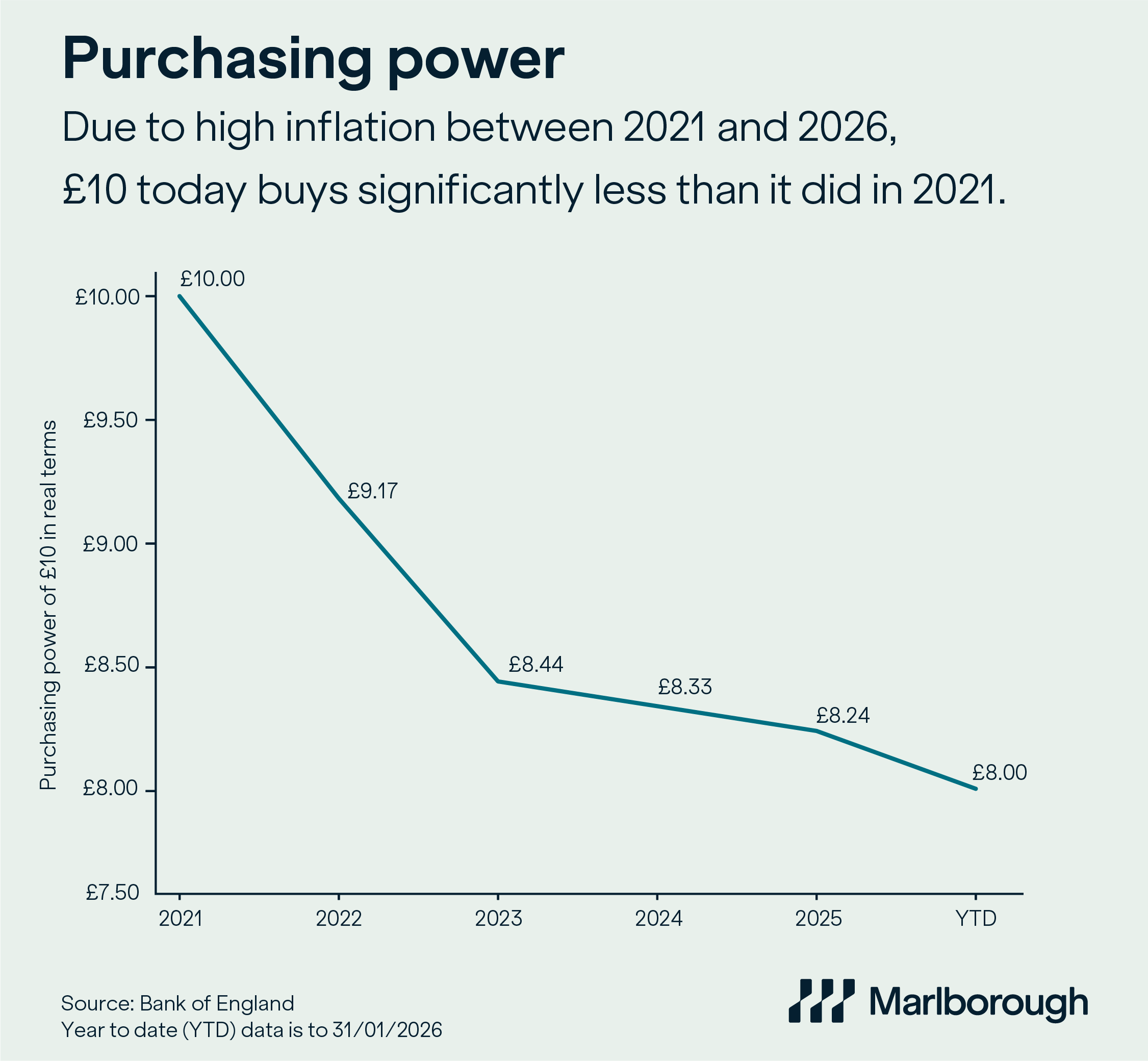
Markets have experienced something similar over the past five years. That steady rain has been inflation. Like drizzle falling day after day, inflation quietly erodes purchasing power. This week’s chart shows how the value of £10 has changed since 2021.
Bank of England figures show Consumer Price Index inflation in the UK rose at an average annual rate of just over 4.5% between 2021 and January this year, which means prices have increased by 25% over that period.
As a result, the same basket of goods that cost £10 in 2021 now costs roughly £12.50. The £10 note in your wallet looks the same – but in real terms it buys closer to £8 worth of goods.
This erosion of purchasing power has shaped behaviours. Households have delayed replacing appliances, holidays were postponed and larger discretionary purchases were put off. In the business world, companies became more cautious. After years of rising prices, the economic ground has become saturated.
But nothing lasts forever – even the rain in a Cornish winter – and there are signs the economic weather system is beginning to shift.
UK inflation fell sharply to 3% in January, down from 3.4% in December. The Bank of England expects inflation to move closer to its 2% target from April. Prices won’t be falling back to 2021 levels. They’re still rising, but the pace of increase is slowing – and that matters.
When inflation is accelerating, confidence typically falls. People hesitate about spending. Businesses cut costs and reduce expenditure. When inflation slows, behaviour adjusts. Consumers acclimatise to the new price level. Wages catch up. Replacement cycles resume. Spending that has been postponed begins to reappear.
Historically, this adjustment phase often provides more durable support for economic growth and stock markets.
Persistent inflation erodes quietly, much like weeks of rain. But it rarely rains forever. As the pace of price increases slows, confidence and spending can return more quickly than expected.
Stock markets don’t wait for perfect sunshine – they respond when the rainbow appears.
And as any allotment holder knows, the most productive moments often arrive while the ground is still wet. It’s wise to have a good waterproof coat to help keep us dry when it rains. Similarly, investing consistently in a well-diversified multi-asset portfolio can help manage the effects of inflation on the wealth we’re building for the future.
This article is provided for general information purposes only and should not be construed as personal financial advice to invest in any fund or product. These are the investment manager’s views at the time of writing and should not be construed as investment advice. The opinions expressed are correct at time of writing and may be subject to change. Capital is at risk. The value and income from investments can go down as well as up and are not guaranteed. An investor may get back significantly less than they invest. Past performance is not a reliable indicator of current or future performance and should not be the sole factor considered when selecting funds.

