
View
Multi-Asset


Capital is at risk. The value and income from investments can go down as well as up and are not guaranteed. An investor may get back significantly less than they invest. Past performance is not a reliable indicator of current or future performance and should not be the sole factor considered when selecting funds.
By selecting intermediary or institutional investor I confirm that I am a financial professional and understand that the information should not be distributed to or relied upon by any other persons. It’s provided for general information purposes only and is not personal advice to anyone to invest in any fund or product. Information taken from trade and other sources is believed to be reliable, although we don’t represent this as accurate or complete and it shouldn’t be relied upon as such.


There are hot seats, and then there are hot seats.
Following Sir Keir Starmer’s resignation, Andy Burnham looks increasingly likely to be the next occupant of the hottest seat in British politics, as the UK’s seventh Prime Minister in ten years.
But for many British people, the Downing Street drama was a sideshow last week. There was no question about the really big issue: the weather.
Across much of the UK and Europe, temperatures soared above 30C. Electric fans were dragged out of cupboards and ice creams became ‘essential’ rather than optional. Enterprising individuals headed to bed with ice packs or frozen hot water bottles.
The effects of the blistering weather were not without irony – one of the events scheduled as part of London Climate Action Week had to be cancelled because of the extreme heat.
This week’s chart shows the weather doesn’t just affect how comfortable we are sitting at our desk or when we’re trying to sleep. It can have important economic and political impacts too. Our focus is El Niño, one of the most powerful naturally occurring climate patterns on Earth, which has returned this year.
Experts have warned it could develop into one of the strongest on record as it builds during the rest of 2026.
The phenomenon develops in the Pacific Ocean and the atmosphere above it. Winds that normally blow east-to-west weaken or reverse and warmer water spreads across the central and eastern tropical Pacific.
The ocean transfers heat into the air and the effect can be to disrupt rainfall, harvests and food supply chains around the world. A strong El Niño can bring droughts in some regions, floods in others and have a serious knock-on effect on crops such as rice, corn and wheat.
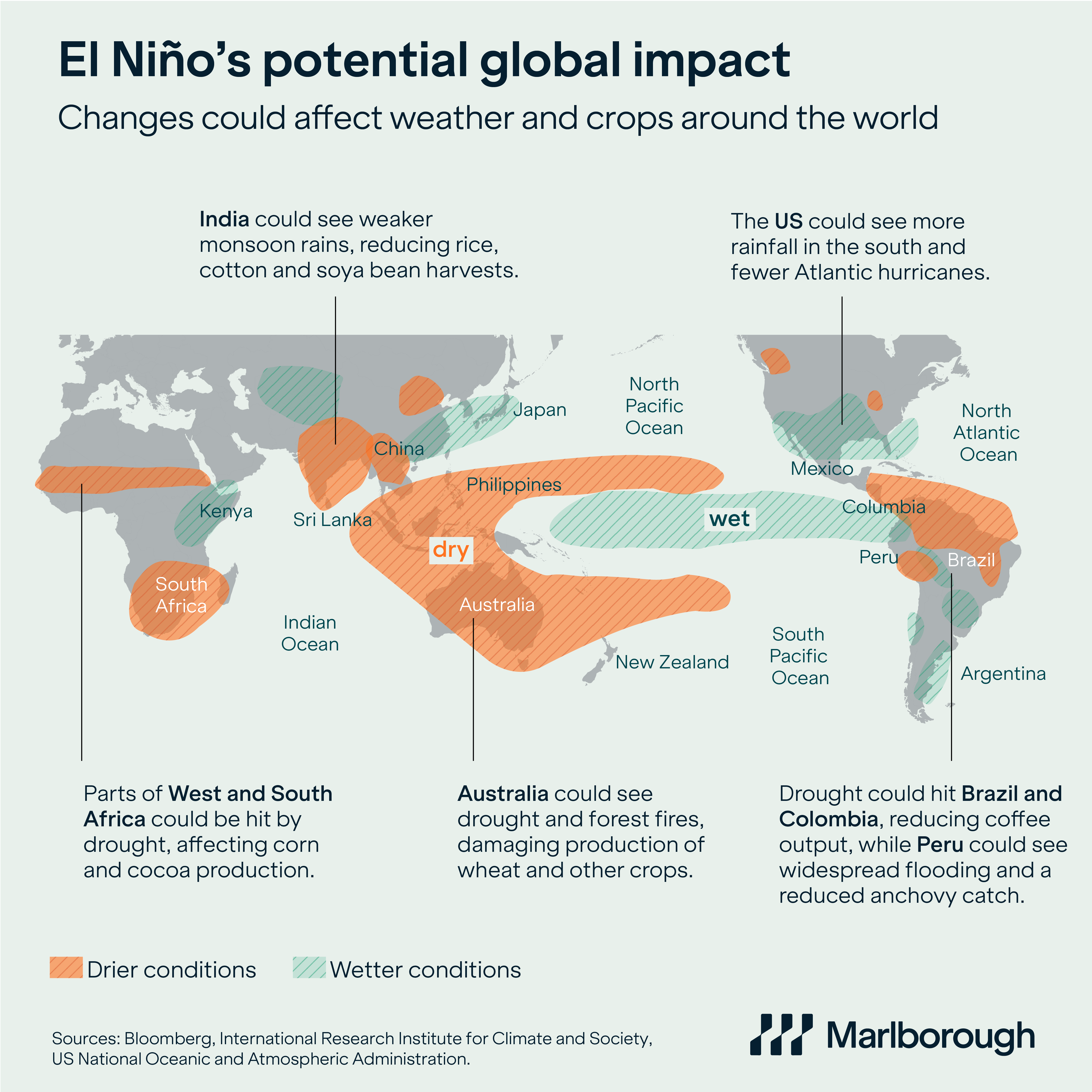
The potential impact on harvests shown in our chart matters, because food prices are one of the most visible forms of inflation. Voters may not closely follow government borrowing costs, central bank minutes or fiscal rules, but they notice when their weekly shop costs more. The political revolving door of recent years in the UK has many causes, but the rising cost of living has certainly been an important factor.
Investors can’t watch every weather pattern, just as they can’t predict every political reshuffle. Nonetheless El Niño provides an important reminder for us, which is that inflation shocks can often come from unexpected places.
If Andy Burnham does succeed in becoming the UK’s new Prime Minister, investors will be watching closely. They’ll want to hear what he has to say on tax, spending, borrowing and investment. If confidence in his administration’s fiscal path wobbles, government borrowing costs and mortgage rates could become part of the conversation once again.
Meanwhile, thousands of miles away in the Pacific Ocean, a fresh challenge may already be brewing for the Prime Minister-in-waiting.
Political leaders change, weather patterns alter and inflation pressures ebb and flow. But a diversified multi-asset portfolio – holding shares in strong businesses, along with income-paying assets – is designed to help you successfully navigate changing weather, be that political, economic or financial.
This article is provided for general information purposes only and should not be construed as personal financial advice to invest in any fund or product. These are the investment manager’s views at the time of writing and should not be construed as investment advice. The opinions expressed are correct at time of writing and may be subject to change. Capital is at risk. The value and income from investments can go down as well as up and are not guaranteed. An investor may get back significantly less than they invest. Past performance is not a reliable indicator of current or future performance and should not be the sole factor considered when selecting funds.

