
View
Multi-Asset


Capital is at risk. The value and income from investments can go down as well as up and are not guaranteed. An investor may get back significantly less than they invest. Past performance is not a reliable indicator of current or future performance and should not be the sole factor considered when selecting funds.
By selecting intermediary or institutional investor I confirm that I am a financial professional and understand that the information should not be distributed to or relied upon by any other persons. It’s provided for general information purposes only and is not personal advice to anyone to invest in any fund or product. Information taken from trade and other sources is believed to be reliable, although we don’t represent this as accurate or complete and it shouldn’t be relied upon as such.


We had a question from a client who asked, ‘Why is Greenland suddenly centre stage?’
Anyone with young kids will recognise the scene. A toy sits untouched for weeks, maybe months, until one child suddenly picks it up. Almost instantly, it becomes the most important object in the house. Voices rise, emotions flare and before long there’s a full-blown argument over something that, moments earlier, nobody seemed remotely interested in.
That seems like one way to view the diplomatic crisis that emerged, apparently from nowhere, over Greenland.
Part of the Kingdom of Denmark, this vast island in the Arctic is for most people a remote icy landmass on the edge of the map. For years, even the US seemed to be losing interest, steadily scaling back its military footprint from 12 bases to just one, Pituffik Space Base. Yet today, Greenland is firmly back in the geopolitical spotlight. So, what’s changed?
First and foremost, this is about location. Greenland sits on the shortest routes between North America and Russia, making it strategically vital for missile defence, early-warning radar systems and space surveillance. As geopolitical tensions rise and military technology evolves, Greenland has taken on critical importance.
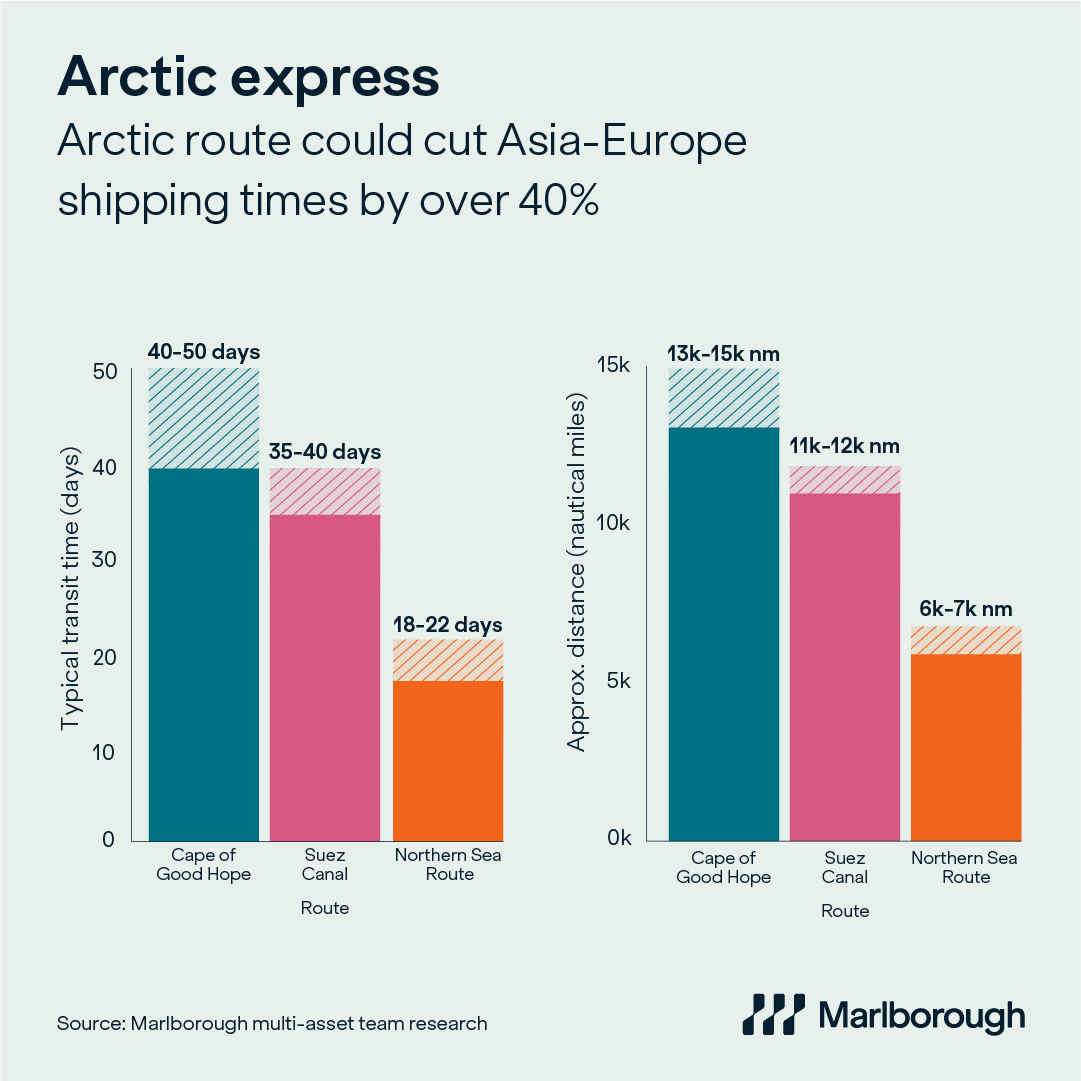
Climate change is also reshaping global trade. As polar ice retreats further each year, new Arctic shipping corridors are becoming increasingly viable. These routes could cut sailing times between Asia and Europe by more than 40% compared with traditional journeys via the Suez Canal. This would create a faster, more direct shipping corridor. Greenland doesn’t control these routes, but it sits right at the gateway to the Arctic, giving it growing importance in trade, naval security, surveillance and infrastructure. In effect, it’s taking on strategic importance as the gateway to a potential future global shipping superhighway.
Yes, they matter too. Greenland holds deposits of rare earth elements and other critical minerals, including:
• Neodymium and praseodymium: used in electric vehicle motors, wind turbines and defence systems
• Dysprosium and terbium: vital for heat-resistant magnets in clean energy and military technology
• Graphite, nickel, copper and zinc: essential materials for batteries, electrification and renewable energy infrastructure
These materials underpin the energy transition, advanced electronics and modern defence systems. Today, China dominates rare earth supply chains, particularly in processing and refining, which is the true bottleneck. Greenland therefore offers long-term strategic opportunities. This is not a quick fix, but the Arctic could provide vital alternative supplies in an increasingly fragmented world.
Markets dislike uncertainty more than almost anything else. Last week’s sharp pullback in US equities, one of the largest daily declines since US President Donald Trump’s ‘liberation day’ tariff announcements, was a reminder of how quickly sentiment can change. For much of last year, investors became comfortable with what became known on Wall Street as the ‘TACO trade’. This is short for Trump Always Chickens Out. The logic was simple: when markets reacted negatively, Trump backed down, and he did again last week at Davos.
The renewed focus on Greenland is a move towards controlling trade routes, securing essential resources and strengthening strategic positioning. Like that toy at home, what was once overlooked suddenly matters again, because the game itself has changed. For investors, this reinforces a familiar lesson: while geopolitics can drive short-term volatility – discipline, diversification and perspective remain the most reliable long-term strategies.
This article is provided for general information purposes only and should not be construed as personal financial advice to invest in any fund or product. These are the investment manager’s views at the time of writing and should not be construed as investment advice. The opinions expressed are correct at time of writing and may be subject to change. Capital is at risk. The value and income from investments can go down as well as up and are not guaranteed. An investor may get back significantly less than they invest. Past performance is not a reliable indicator of current or future performance and should not be the sole factor considered when selecting funds.

