
View
Multi-Asset


Capital is at risk. The value and income from investments can go down as well as up and are not guaranteed. An investor may get back significantly less than they invest. Past performance is not a reliable indicator of current or future performance and should not be the sole factor considered when selecting funds.
By selecting intermediary or institutional investor I confirm that I am a financial professional and understand that the information should not be distributed to or relied upon by any other persons. It’s provided for general information purposes only and is not personal advice to anyone to invest in any fund or product. Information taken from trade and other sources is believed to be reliable, although we don’t represent this as accurate or complete and it shouldn’t be relied upon as such.


On any normal day, seeing people wandering around carrying colanders and homemade viewing devices crafted from cereal boxes would seem rather odd.
Yet last week it was a common sight in the UK, as millions of people sought a way to glimpse the solar eclipse. For many, it was a once-in-a-generation event. People planned ahead, travelled, bought specialist glasses and gathered together simply to experience something memorable.
This desire to be part of a spectacle is deeply human, and we’ve seen something similar recently in cinemas.
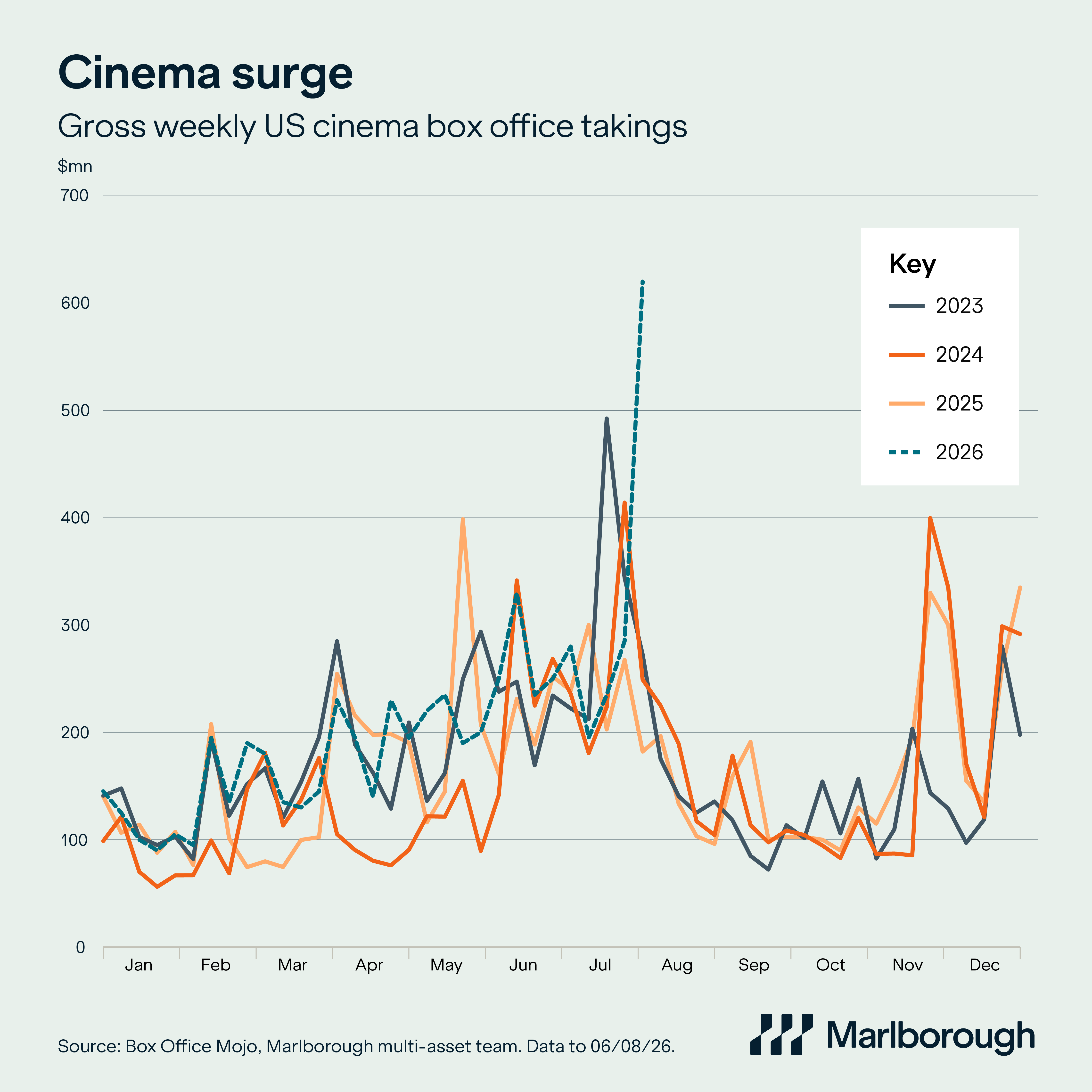
Our chart shows how US consumers have been flocking to the big screen over the summer, eager to see blockbuster releases such as Spider-Man: Brand New Day and The Odyssey. In the week the new Spider-Man film was released, gross box office takings by US cinemas surged to almost $640m.
While headlines often focus on squeezed household budgets, consumers are clearly still willing to reach into their pockets when offered an experience that they believe is worth paying for.
That's an important point for investors.
A common question at this stage of the economic cycle is whether consumers are beginning to crack under the weight of higher prices and elevated interest rates. There are many ways to monitor consumer health, but spending on leisure and entertainment remains a useful temperature check. If households tighten their belts significantly, discretionary spending is often one of the first places we'd expect to see weakness emerge.
Instead, cinema attendance suggests consumers remain engaged.
Of course, the US, like the UK, has been experiencing scorching temperatures, which may have played a supporting role. After all, a cool air-conditioned cinema is an attractive destination when temperatures climb. But weather alone doesn't create blockbusters. People still need the confidence and willingness to spend.
The eclipse may also offer another lesson for investors.
Many people attempted to view it using improvised equipment and questionable advice sourced from the internet. While creative, it wasn't always the most sensible approach. The same can be said of investing. Building long-term wealth rarely comes from chasing the latest social media tip or listening to a self-proclaimed financial influencer on YouTube. Success generally comes from proper preparation, the right tools and a well-thought-out plan.
The people who had the most positive eclipse experience were often those who had prepared in advance and equipped themselves properly. Investing tends to be very similar.
And who knows? If chasing eclipses is on your bucket list, a disciplined investment strategy might just help you fund a trip to see the next one.
Just as the eclipse reminded us that people will make an effort for something special, this summer's cinema numbers suggest the consumer remains willing to spend on experiences that matter. For investors, this is another encouraging sign that the US economy – the world’s largest – remains resilient.
This article is provided for general information purposes only and should not be construed as personal financial advice to invest in any fund or product. These are the investment manager’s views at the time of writing and should not be construed as investment advice. The opinions expressed are correct at time of writing and may be subject to change. Capital is at risk. The value and income from investments can go down as well as up and are not guaranteed. An investor may get back significantly less than they invest. Past performance is not a reliable indicator of current or future performance and should not be the sole factor considered when selecting funds.

